
If you keep landing on the same dark, twisted tree design while scrolling tattoo inspiration, you are not alone. The poison tree tattoo meaning has become one of the most searched tattoo symbols this year, and once you understand the story behind it, it is easy to see why. This is not a random gothic tree. It carries a full narrative about anger, silence, and what happens when emotions never get released.
This guide breaks down the poison tree tattoo meaning from every angle: its literary roots, its emotional symbolism, the most popular design styles, placement ideas, and the psychology behind why this image resonates so strongly with people today.
What Is a Poison Tree Tattoo?
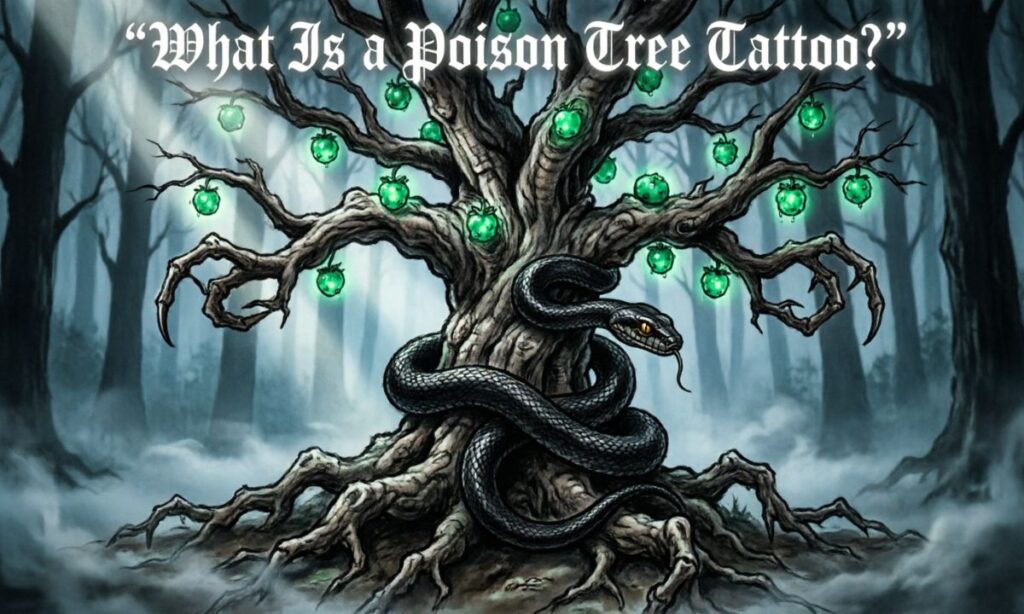
A poison tree tattoo is a piece of body art built around a dark, twisted, or gothic looking tree, often paired with fruit, thorns, roots, or bare branches. Unlike a cheerful tree of life design, this tattoo is meant to look a little unsettling on purpose. Bark may appear cracked. Branches often twist into sharp, aggressive shapes. Fruit may drip, glow, or look slightly rotten.
At its core, the poison tree tattoo meaning revolves around one central idea: something poisonous grew out of something small and quiet. That small thing is usually anger, hurt, or resentment that was never spoken out loud.
Common visual elements include:
- A gnarled trunk with exposed, tangled roots
- A single glowing or dripping fruit
- Bare or thorned branches instead of full leaves
- A serpent wrapped around the trunk
- Contrast between a healthy side and a dying side of the tree
Every element adds another layer to the poison tree tattoo meaning, which is what makes this design so flexible for personal storytelling.
The Origins: William Blake’s “A Poison Tree” (1794)
The poison tree tattoo meaning traces directly back to literature. William Blake wrote “A Poison Tree” in 1794 as part of his collection Songs of Experience. The poem tells a short but brutal story. The narrator feels angry at a friend, tells the friend, and the anger fades away. Later, the narrator feels angry at an enemy, says nothing, and instead lets that anger sit and grow.
That silence becomes a seed. The seed becomes a tree. The tree grows a single, poisoned apple. The enemy eventually eats the fruit and dies. Blake was known for writing about raw human emotion without softening it, and this poem does exactly that.
This is why the poison tree tattoo meaning is so tightly linked to bottled up anger. The poem is not really about a literal tree at all. It is about what happens inside a person who refuses to speak their truth.
Poison Tree Tattoo Meaning: Core Symbolism
So what does a poison tree tattoo actually stand for once you strip away the literary reference? At its heart, the poison tree tattoo meaning centers on suppressed emotion, especially anger that was never expressed and slowly turned into something darker.
Here is a simple breakdown of the core symbolism:
| Symbol Element | What It Represents |
| The seed | A small, unspoken feeling or grudge |
| The growing tree | Resentment building over time |
| The fruit | The final, harmful result of buried anger |
| Roots | How deeply the emotion is buried within the person |
| A dying branch | The cost of carrying unresolved pain |
The poison tree tattoo meaning is rarely just about anger toward someone else. Many wearers describe it as a personal reminder to communicate instead of staying silent, since silence is the very thing that allowed the tree to grow in the first place.
Who Gets a Poison Tree Tattoo and Why
People choose this tattoo for a wide range of deeply personal reasons. The poison tree tattoo meaning tends to cluster around a few recurring themes rather than one single explanation.
Common reasons people choose this design include:
- Marking the end of a toxic relationship or friendship
- Honoring personal growth after holding in anger for too long
- Processing betrayal or broken trust
- Reminding themselves not to bottle up emotions again
- Turning literary appreciation into permanent art
These reasons often overlap. Someone healing from betrayal may also be marking personal growth at the same time. That layered quality is part of what makes the poison tree tattoo meaning so appealing to people who want a design with real substance behind it, not just a pretty picture.
Popular Design Variations
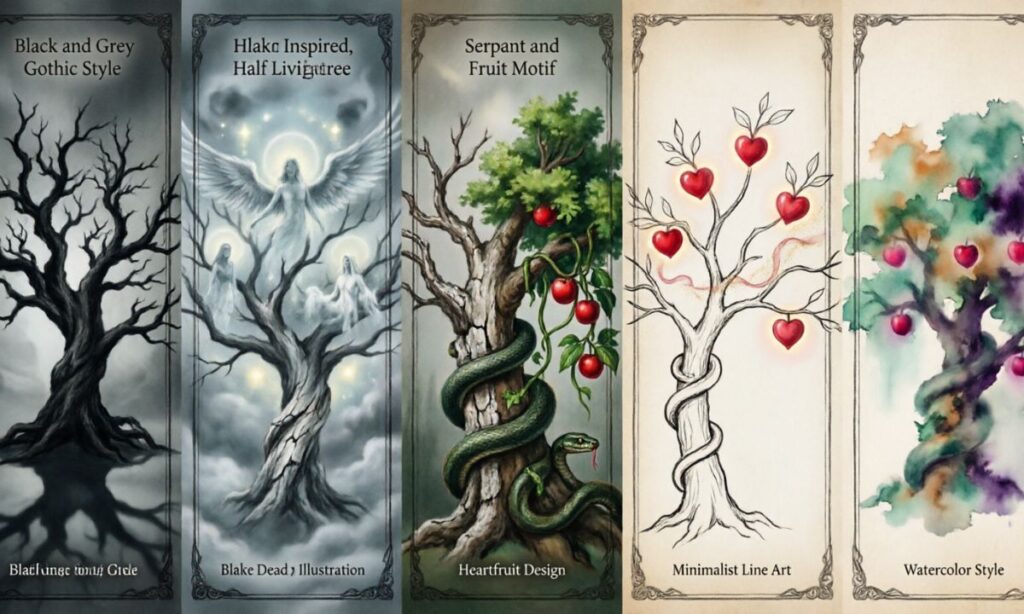
The poison tree tattoo meaning stays consistent across styles, but the visual execution varies a lot depending on personal taste.
Black and Grey Gothic Style
This is the most traditional take, using deep shading, twisted branches, and a moody, almost horror inspired look. It leans hardest into the darker side of the poison tree tattoo meaning.
Blake Inspired Illustration
Some wearers request designs that echo the illustrated plates Blake created for his own poetry collections, blending old fashioned linework with literary detail.
Half Dead, Half Living Tree
One side of the tree looks vibrant and alive while the other looks dead and cracked. This visually represents internal conflict, a key part of the poison tree tattoo meaning.
Serpent and Fruit Motif
Adding a serpent wrapped around the trunk connects the design to themes of temptation and consequence, echoing biblical imagery alongside Blake’s poem.
Heartfruit Design
Instead of an apple, some designs replace the fruit with a small heart, making the emotional theme of the poison tree tattoo meaning more literal and personal.
Minimalist Line Art
A simple, single line tree with subtle thorny branches. This style keeps the symbolism intact while staying subtle and easy to place almost anywhere.
Watercolor Style
Soft color washes behind a dark tree outline. This softens the visual tone while keeping the underlying poison tree tattoo meaning fully intact.
Poison Tree Tattoo Meaning for Girl
For many women, the poison tree tattoo meaning represents strength after emotional hardship rather than anger itself. It often symbolizes surviving a toxic relationship, reclaiming personal power, or honoring the process of healing from betrayal. Softer styles like watercolor or fine line work are popular choices among women who want the emotional weight without an overly harsh visual.
Poison Tree Tattoo Meaning for Guys
For men, the poison tree tattoo meaning is often tied to themes of control, restraint, and internal battle. It can represent learning to manage anger rather than letting it build silently, or it can mark a specific period of hardship that was overcome. Bold black and grey styles with heavier shading tend to be the most requested among male clients.
Poison Tree Tattoo Designs
When browsing poison tree tattoo designs, most fall into one of a few visual categories: realistic and detailed, illustrative and storybook like, or minimal and symbolic. Popular add ons include a single glowing fruit, exposed roots, a paired serpent, or short lines from Blake’s original poem worked into the branches. The strength of the poison tree tattoo meaning means it works well as both a small accent piece and a large statement design.
Poison Tree Tattoo Forearm
The forearm is one of the most requested placements for this design. It offers enough space for detailed branch work while staying easy to show or cover depending on the setting. A forearm placement also allows the tree to flow naturally with the arm’s shape, which suits the twisting branch patterns common in poison tree tattoo designs.
Color Meanings in Poison Tree Tattoos
Color choice adds another layer to the poison tree tattoo meaning. Here is a quick reference table.
| Color | Meaning in a Poison Tree Tattoo |
| Black and grey | Sorrow, buried anger, gothic tone |
| Deep red | Anger, danger, passion |
| Purple | Mystery, transformation, healing |
| Green (dying tones) | Decay, toxicity, slow damage |
| Gold or amber fruit | Temptation, false reward |
Most wearers stick to black and grey since it keeps the tattoo feeling raw and serious, matching the emotional tone of the original poem.
Poison Tree Tattoo Meaning Simple
In the simplest possible terms, the poison tree tattoo meaning is this: anger that stays hidden does not disappear, it grows. That single sentence captures the entire idea behind Blake’s poem and the tattoo it inspired. It is a visual reminder that silence has a cost.
Poison Tree Tattoo Meaning Bible
Many people notice a connection between this design and the Tree of Knowledge from the Book of Genesis. The poisoned fruit echoes the forbidden fruit, and both stories center on consequence following a choice. Because of this overlap, some wearers lean into the poison tree tattoo meaning as a broader symbol of temptation, sin, and moral reckoning rather than sticking strictly to Blake’s poem. Others combine both readings into one design.
Best Placement Options for a Poison Tree Tattoo
Placement affects how much detail a tattoo can hold and how visible it will be day to day.
- Forearm: Great for detailed branch work and visibility
- Upper arm or shoulder: Allows for larger, more elaborate trees
- Back: Ideal for full scale designs with roots and canopy
- Ribcage: A more private placement for personal meaning
- Calf or thigh: Works well for vertical tree shapes
- Wrist or ankle: Best for minimalist versions
Choosing placement often comes down to how personal the poison tree tattoo meaning feels to the wearer. More private meanings tend to go on less visible skin, while designs meant as open statements often go somewhere visible.
Psychological Dimension: Why This Symbol Resonates So Deeply
There is a reason the poison tree tattoo meaning keeps gaining popularity year after year. Psychologically, humans are wired to notice the gap between what they feel and what they say out loud. Most people have experienced smiling at someone while quietly holding onto hurt underneath. That exact tension is what Blake captured over two centuries ago, and it still feels relevant today.
The tattoo works almost like a mirror. It reflects an internal process many people recognize instantly: watering resentment instead of releasing it. For some, getting this tattoo becomes part of the healing process itself, a permanent commitment to stop repeating that pattern. For others, it simply honors a chapter they already worked through.
This blend of literary depth, emotional honesty, and striking visual symbolism is exactly why the poison tree tattoo meaning continues to resonate so strongly heading into 2026.
Frequently Asked Questions
What does a poison tree tattoo mean?
It symbolizes suppressed anger and resentment that grows over time when left unspoken, inspired by William Blake’s 1794 poem.
Is the poison tree tattoo based on a real poem?
Yes, it comes from William Blake’s poem “A Poison Tree,” published in Songs of Experience.
Is this tattoo only for people who have experienced betrayal?
No, many wearers choose it for personal growth, healing, or as a reminder to communicate honestly.
Does the poison tree tattoo have religious meaning?
Some wearers connect it to the Tree of Knowledge in Genesis, though the primary origin is literary, not biblical.
Where is the most popular placement for this tattoo?
The forearm and upper arm are the most requested spots due to space for detail and visibility.
Can this tattoo be done in a minimalist style?
Yes, simple line art versions are popular for wearers who want subtle symbolism.
Conclusion
The poison tree tattoo meaning offers something rare in body art: a design rooted in real literature, real emotion, and a message that still feels true today. Whether it represents a toxic relationship you walked away from, anger you are learning to release, or simply a poem that changed how you see silence, this tattoo carries weight far beyond its visual style. Understanding the full poison tree tattoo meaning before getting inked ensures the design you choose truly reflects your own story, not just a trend.